

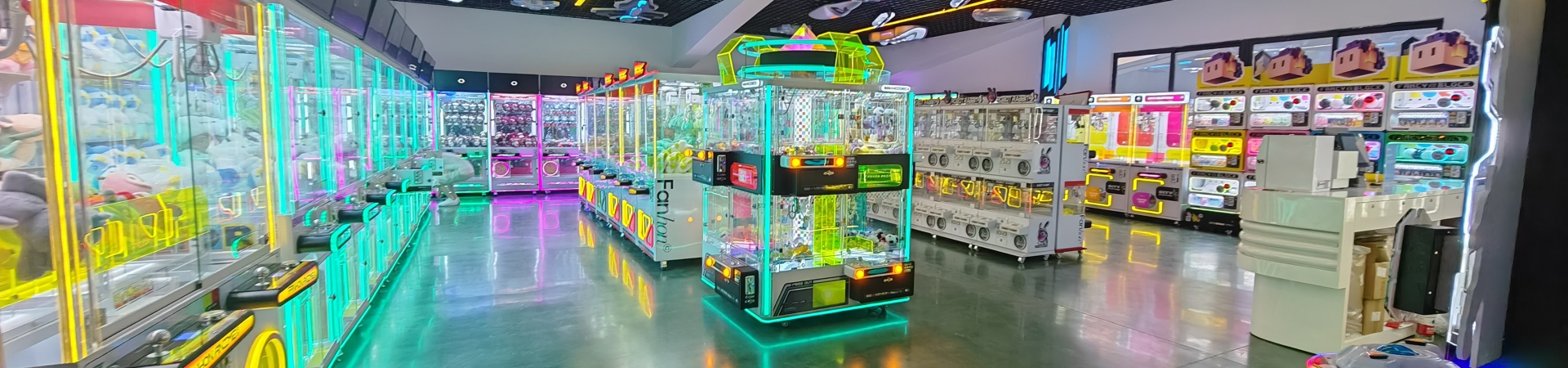
To choose a reliable claw machine supplier, check whether the supplier has verifiable manufacturing capabilities, clear product specifications, consistent quality control, suitable customization options, transparent pricing, export experience, available spare parts, and responsive after-sales support. Buyers should also verify samples or factory information when possible and compare the complete purchasing cost rather than selecting a supplier based only on the lowest price.
Introduction
Finding a claw machine supplier is easy.
Finding a reliable claw machine supplier is much more important.
For individual buyers and businesses purchasing amusement equipment, the supplier can have a major impact on the purchasing experience and long-term operation of the machines.
A low quotation may look attractive, but the lowest initial price does not necessarily mean the best overall value. Differences in machine components, cabinet construction, payment systems, customization, packaging, shipping, spare parts, and technical support can affect the total cost of ownership.
For overseas buyers, supplier selection is even more important because communication, transportation, customs requirements, and after-sales service may all take place across different countries.
This guide explains how to evaluate a claw machine supplier before placing an order.
1. First Check Whether the Supplier Is a Real Manufacturer
One of the first questions to ask is:
Is this company actually a claw machine manufacturer, or is it a trading company?
A trading company is not necessarily unreliable. However, buyers should understand where the machines are actually produced and who is responsible for quality control and after-sales support.
A manufacturer may have:
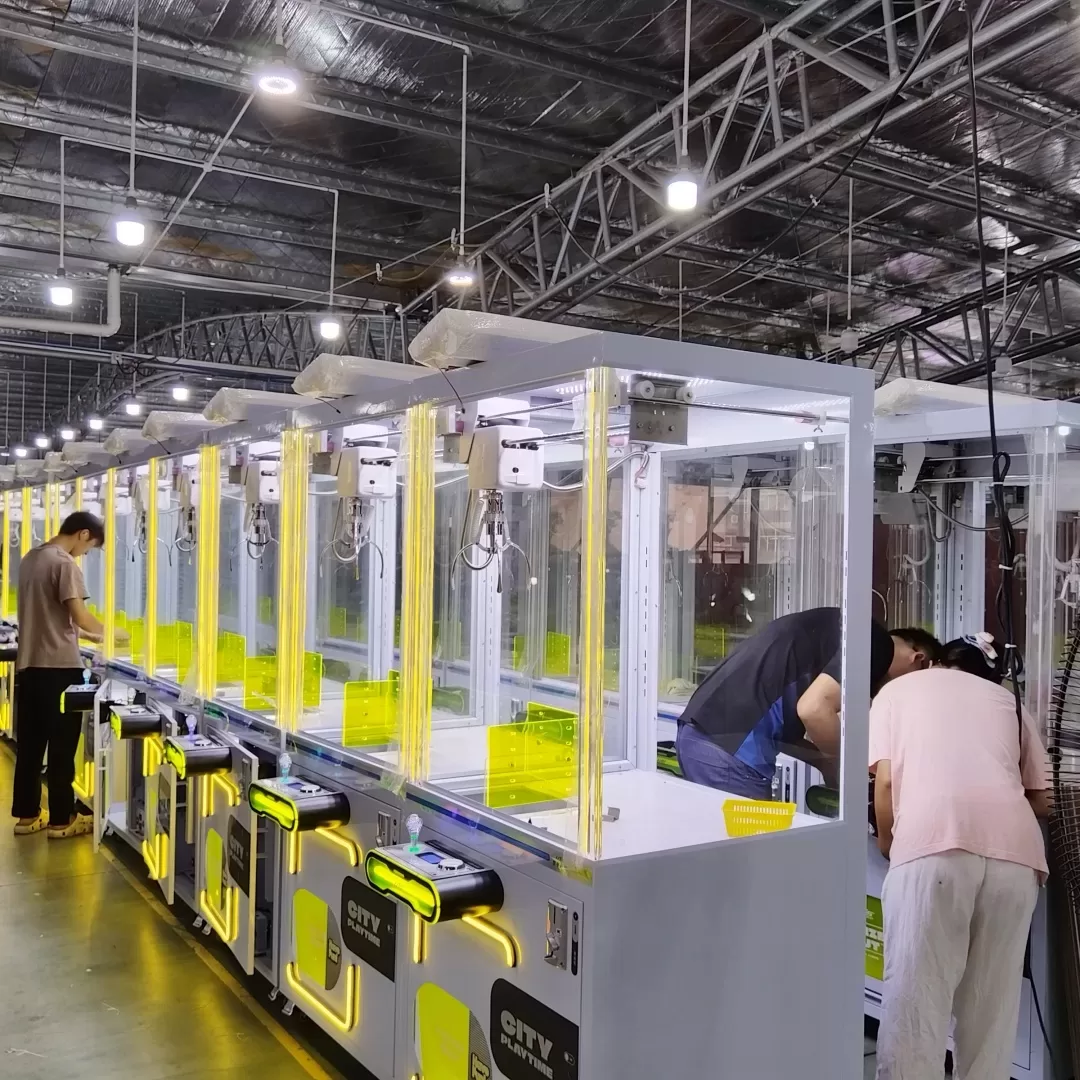
Production facilities
Assembly lines
Engineering staff
Quality-control processes
Product development capabilities
Spare-parts resources
Customization capabilities
When evaluating a supplier, ask for:
Factory photos
Production videos
Product catalogs
Factory address
Production information
Live video factory tour, if available
For larger orders, an on-site factory visit or virtual factory inspection can provide additional confidence.
Industry sourcing guides also recommend verifying the supplier's production capability instead of relying only on online product listings.
2. Check the Supplier's Experience With Claw Machines
A company that sells many unrelated products may not necessarily have deep expertise in claw machines.
Look at whether the supplier specializes in:
Claw machines
Crane machines
Prize machines
Arcade machines
Amusement equipment
You can also ask how long the company has been producing or supplying these products.
However, experience should be verified rather than judged only by a number of years stated on a website.
Useful evidence can include:
Existing product models
Factory production videos
Customer project photos
Product development examples
Export experience
Repeat-order information
3. Check the Product Quality
Product quality is one of the most important factors when choosing a claw machine supplier.
A claw machine may operate hundreds or thousands of times in a commercial environment, so mechanical and electronic stability matters.
Pay attention to:
Cabinet Construction
Check:
Frame structure
Metal components
Acrylic or glass panels
Cabinet finishing
Door structure
Internal wiring
Mechanical Components
Check:
Claw mechanism
Motors
Movement system
Joystick
Buttons
Sensors
Electronic Components
Check:
Main control board
Power supply
Lighting
Payment system
Display
Wiring
A professional supplier should be able to explain the major components used in the machine.
4. Test a Sample Before Buying in Bulk
If you are considering a large order, a sample can be useful.
Instead of judging a machine only from photographs, inspect the actual equipment where practical.
Test:
Claw movement
Claw grip
Joystick response
Button operation
Prize chute
Lighting
Payment system
Sound
Cabinet structure
Also check whether the machine is suitable for your intended prizes.
For international B2B buyers, sample evaluation can help identify problems before a larger order is placed. Supplier-selection guides commonly recommend testing samples or inspecting showroom machines when possible.
5. Check Prize Compatibility
Not every claw machine is suitable for every type of prize.
Potential prizes include:
Plush toys
Stuffed animals
Blind boxes
Figures
Small toys
Capsules
Keychains
Promotional products
Before purchasing, provide the supplier with:
Prize dimensions
Approximate weight
Product photos
Packaging information
The supplier can then help determine whether the machine and claw configuration are appropriate.
This is particularly important when you plan to use unusually large, small, light, or heavy prizes.
6. Check Customization Options
If you are buying machines for your own arcade brand or commercial project, customization may be important.
Possible options include:
Custom logo
Cabinet graphics
Custom colors
Lighting
Branding
Language
Payment configuration
Machine appearance
Functional configuration
Ask the supplier:
Can you customize the machine according to our artwork and requirements?
Also ask:
Who prepares the artwork?
Is there an artwork approval process?
Will a design proof be provided?
Can the machine be customized for different markets?
A supplier with a clear customization workflow can reduce communication problems during production.
7. Check OEM and ODM Capabilities
For distributors, arcade brands, and larger buyers, OEM or ODM services may be useful.
OEM
OEM typically means the manufacturer produces equipment according to the buyer's specified branding or requirements.
ODM
ODM can involve more manufacturer participation in product design or development.
If you require OEM or ODM, ask the supplier about:
Product development
Cabinet design
Artwork
Hardware configuration
Software configuration
Sample approval
Production process
Not every supplier has the same level of OEM/ODM capability.
8. Check Payment System Compatibility
Different countries and venues may require different payment methods.
Possible options include:
Coins
Tokens
Banknotes
Card readers
Cashless payment
QR-based payment
Before ordering, tell the supplier where the machine will be used and which payment system you need.
You should also confirm whether the payment system is included in the quoted price or needs to be purchased separately.
9. Check Voltage and Market Requirements
International buyers should confirm electrical requirements before production.
For example, ask about:
Voltage
Frequency
Plug type
Power consumption
Applicable certifications
The exact compliance requirements depend on the destination market and product configuration.
For regulated markets, ask the supplier to provide the relevant documentation for the specific machine you are purchasing rather than assuming that a certificate for another model applies.
Industry buyer guides commonly recommend verifying market-specific certifications and documentation before importing amusement equipment.
10. Ask About Quality Control
A reliable claw machine supplier should be able to explain how machines are inspected before shipment.
Questions to ask include:
Is every machine tested before shipping?
Are the payment systems tested?
Are the claw mechanisms tested?
Are lights and controls checked?
Are customized machines inspected?
Is there a final quality inspection?
You can also ask whether the supplier can provide:
Inspection photos
Testing videos
QC records
Product inspection information
The goal is not simply to hear "we have QC," but to understand what is actually checked.
11. Check Certifications and Compliance Documents
Depending on the destination market, different compliance requirements may apply.
A supplier may have documentation related to:
CE
EMC
LVD
RoHS
FCC
Other local requirements
However, certification requirements depend on the country, product, and applicable regulations.
Therefore, do not simply ask:
“Do you have CE?”
Instead ask:
“Can you provide the relevant compliance documents for this exact claw machine model and my destination market?”
This is a much more useful question for international buyers.