


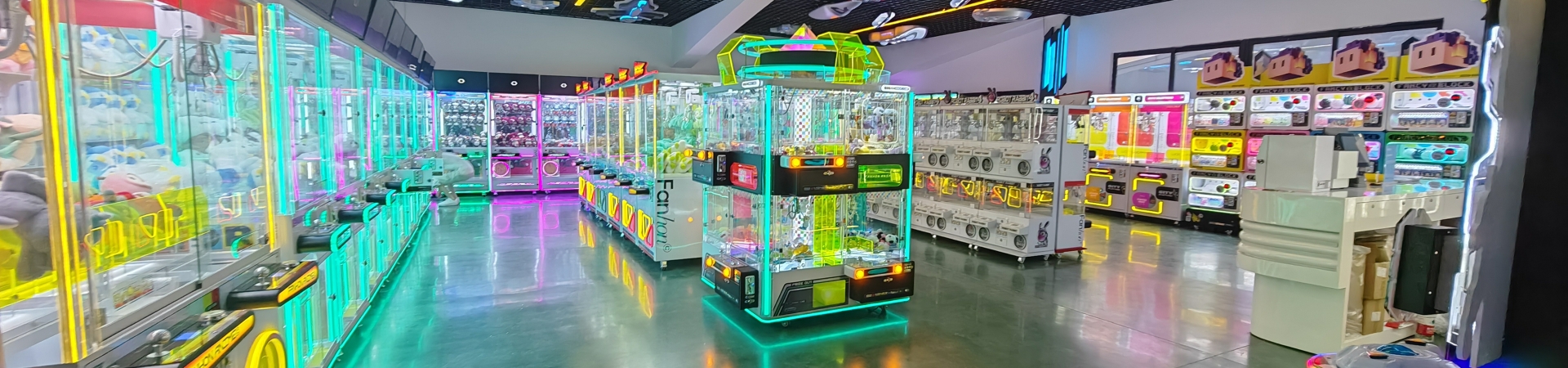
Arcade Machine Market Research Guide: How to Validate a New Venue Idea
Arcade market research is the process of gathering and analyzing data to determine whether a new arcade, family entertainment center (FEC), or claw machine installation will be successful in a specific location. For B2B buyers, building a venue based on a "good feeling" is a massive financial risk. Market research validates demand, identifies the target audience, analyzes competitors, and tests the financial feasibility of the project before a single machine is purchased. A structured research phase can save investors from costly mistakes and lay the foundation for a profitable business.
This guide explains how to conduct effective market research for an arcade project from a business planning perspective.
Why Market Research is Essential
The arcade industry is competitive and location-dependent.
Market research helps buyers:
Confirm that there is enough local demand
Understand the demographic profile of the area
Identify gaps in the local entertainment market
Estimate potential revenue and operating costs
Secure financing by presenting data-backed projections
Avoid investing in a location that cannot support the business
Data reduces risk and increases investor confidence.
Step 1: Define Your Target Market and Concept
Before researching, clarify what you want to build.
Questions to answer:
What type of venue? (Small arcade, large FEC, claw machine zone, retro bar)
Who is the target audience? (Families, teens, young adults)
What is the unique selling proposition (USP)? (Premium prizes, retro theme, VR integration)
What is the estimated size and budget?
A clear concept guides the research process.
Step 2: Analyze Local Demographics and Demand
You need to know who lives and works nearby.
Data to collect:
Population size and growth trends
Age distribution (Are there families? Teens? Seniors?)
Household income levels
Student population (local schools, universities)
Foot traffic patterns (retail hubs, cinemas, malls)
Use local government census data, urban planning reports, and on-site observation.
Step 3: Conduct Competitor Benchmarking
Understand what else is available in the area.
Competitor analysis checklist:
How many arcades or FECs are within a 5-10 km radius?
What machines and games do they offer?
What are their prices and promotions?
What is their reputation (read online reviews)?
What are their weaknesses? (Outdated machines, poor service, dirty venue)
Identify a market gap that your venue can fill (e.g., better prizes, cleaner environment, cashless systems).
Step 4: Survey Potential Customers
Direct feedback provides valuable insights.
Survey methods:
Online surveys in local community groups
In-person intercept surveys at nearby malls
Social media polls
Questions to ask:
How often do you visit arcades?
What games do you prefer? (Claw machines, racing, redemption)
What prizes motivate you?
How much do you typically spend?
What would make you visit a new arcade?
Step 5: Financial Feasibility and Projections
Can the venue make money?
Financial modeling should include:
Capital Expenditure (CapEx): Machines, leasehold improvements, permits, initial inventory
Operating Expenses (OpEx): Rent, salaries, utilities, maintenance, prize restocking
Revenue Projections: Based on foot traffic, target capture rate, and average spend per visit
Break-even Analysis: How long until the venue covers its costs?
Use conservative estimates to ensure the project can survive slow periods.
Step 6: Site Selection Validation
Confirm the physical location fits the concept.
Check:
Zoning and permits for entertainment use
Lease terms and rent costs
Power capacity and ceiling height
Delivery access for large machines
Parking and public transport access
A great concept can fail in a bad location.
Common Market Research Mistakes
Operators sometimes make avoidable mistakes:
Relying only on personal opinion ("I like arcades, so others will too")
Ignoring competitor weaknesses
Overestimating foot traffic and conversion rates
Underestimating setup and operating costs
Not surveying actual potential customers
Failing to check zoning and permit requirements
These mistakes can lead to over-investment and business failure.
Practical B2B Insights
From a business planning perspective, market research works best when it is data-driven and local.
First, visit the site at different times to observe actual foot traffic.
Second, talk to local businesses (cafes, retail shops) about customer flow and demographics.
Third, study competitor reviews to find out what customers love and hate.
Fourth, build a conservative financial model. If it only works with optimistic numbers, it is too risky.
Fifth, use the research to refine your machine mix and venue design before ordering equipment.
Frequently Asked Questions
How do I know if my city needs an arcade?
Analyze the local population demographics, existing competitors, and foot traffic. If there is demand without adequate supply, the market is viable.
What is the most important data for arcade market research?
Local demographics (age, income, family status) and foot traffic patterns are the most critical factors.
How do I analyze competitors?
Visit their venues, play their games, check their prices, and read their online reviews to identify their strengths and weaknesses.
How much does it cost to open an arcade?
Costs vary by size and location. It includes machines, rent, fit-out, permits, and working capital. A realistic budget is essential.
How do I estimate arcade revenue?
Estimate based on foot traffic, a realistic capture rate (e.g., 5-10% of passersby), and average spend per visit.
Should I survey customers before opening?
Yes, surveys help you understand game preferences, prize expectations, and pricing sensitivity.
What if there is a lot of competition?
Competition proves there is demand. You must find a way to differentiate (better prizes, cleaner venue, better service, unique machines).
How long does market research take?
It can take a few weeks to a few months, depending on the scale of the project and the data available.
Conclusion
Arcade market research involves analyzing demographics, benchmarking competitors, surveying customers, and testing financial feasibility. It is a critical step that validates the project before major investments are made.
For B2B buyers planning a claw machine or FEC project, thorough research ensures the equipment mix and venue design meet actual market demand.
If you have validated your market and are ready to plan your arcade equipment order, contact us for product specifications, layout recommendations, and wholesale pricing.