


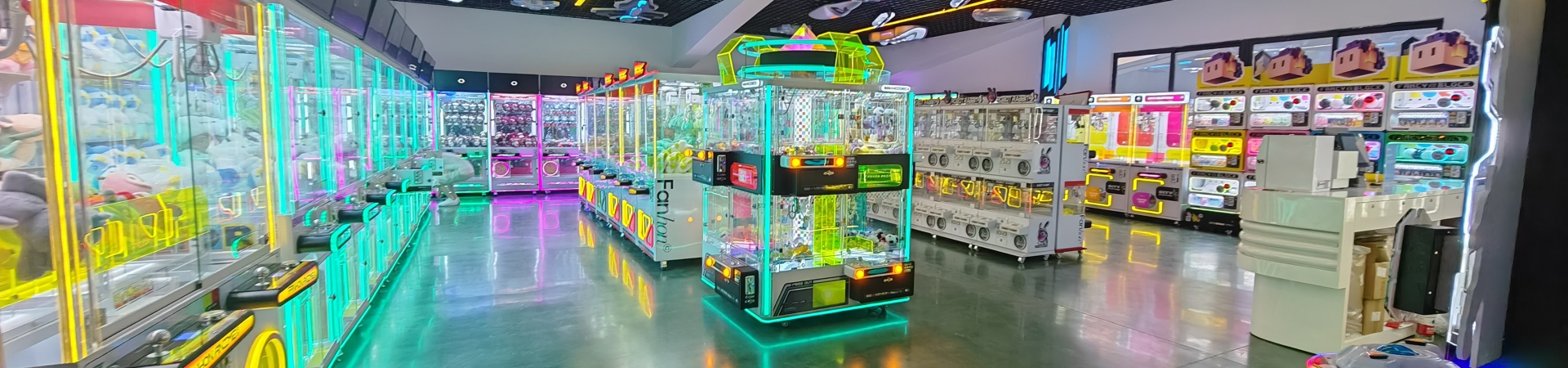
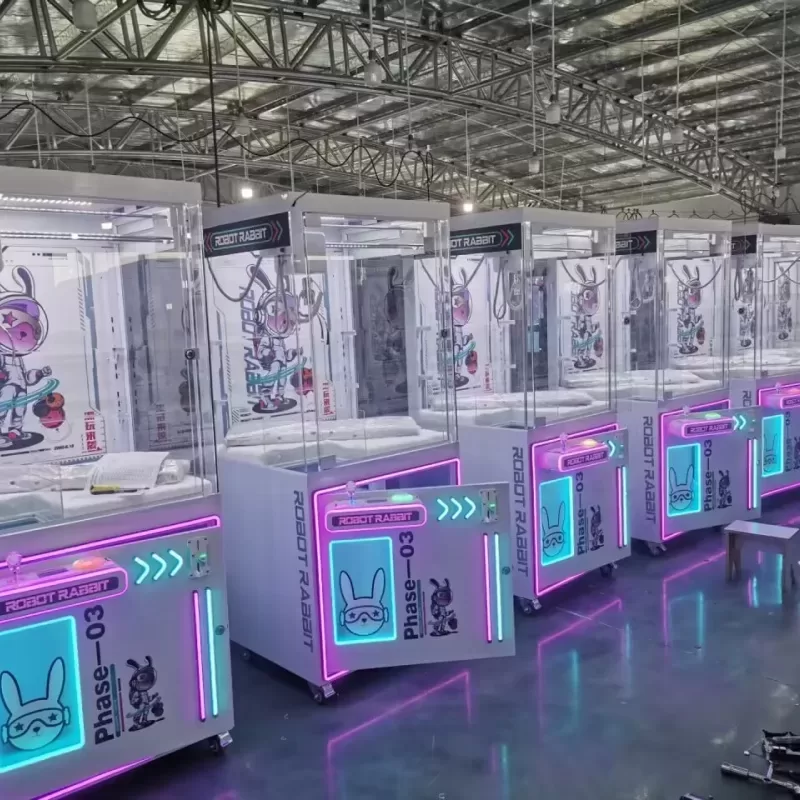
Arcade Machine Voltage and Plug Guide for International Buyers
Arcade machine voltage and plug type must be confirmed before production. Commercial arcade machines are commonly configured for 110V or 220V, and the correct configuration depends on the destination country, machine type, and power requirements. If voltage, frequency, or plug type does not match the local electrical system, the machine may not operate correctly, may require an adapter or transformer, or may be damaged.
This guide explains the main electrical considerations for B2B buyers importing claw machines, prize machines, and other arcade equipment.
Why Voltage and Plug Configuration Matters
Electrical compatibility affects:
Machine operation
Safety
Warranty and support
Installation time
Maintenance and spare parts
Compliance with local electrical standards
A machine configured for the wrong voltage may not start, may run incorrectly, or may be unsafe. Confirming electrical requirements before production is usually easier and less expensive than changing them after delivery.
Common Arcade Machine Voltage Configurations
Most commercial arcade machines are configured for one of the following:
| Voltage | Common Regions | Notes |
|---|---|---|
| 110V | North America, parts of Latin America, Japan | Often 60Hz |
| 220V | Europe, Asia, Africa, Middle East, Australia | Often 50Hz |
| 100V | Japan | Specific configuration |
| 240V | UK, parts of Australia | Depends on local standard |
| Switchable | Some machines | May support 110V/220V |
The exact voltage depends on the destination country and the machine design. Buyers should not assume that a machine is compatible simply because the supplier ships internationally.
Frequency: 50Hz and 60Hz
Voltage is not the only factor. Frequency also matters.
| Frequency | Common Regions |
|---|---|
| 50Hz | Europe, Asia, Africa, Australia |
| 60Hz | North America, parts of South America, Japan |
Some machines can operate on both 50Hz and 60Hz. Others are designed for one frequency. Frequency affects motors, timers, and some electronic components.
Plug Types by Region
Plug type varies by country.
| Plug Type | Common Regions |
|---|---|
| Type A | North America, Japan |
| Type B | North America, Japan |
| Type C | Europe, Asia, South America |
| Type D | India, parts of Africa |
| Type E | France, Belgium, parts of Europe |
| Type F | Germany, Europe, parts of Asia |
| Type G | UK, Ireland, Middle East |
| Type I | Australia, New Zealand, China |
| Type J | Switzerland |
| Type K | Denmark |
| Type L | Italy |
| Type M | South Africa |
| Type N | Brazil |
Buyers should confirm the required plug type for the destination country.
Power Consumption and Circuit Planning
Different machines have different power consumption.
Consider:
Rated power
Running power
Startup current
Number of machines per circuit
Circuit breaker capacity
Cable size
Large machines such as racing games and dance machines may require more power than claw machines or prize machines. Venue electrical planning should be completed before machines are ordered.
How to Confirm Voltage Before Ordering
Before placing an order, confirm the following with the manufacturer:
Destination country
Required voltage
Required frequency
Required plug type
Power consumption
Whether voltage is switchable
Whether a transformer or adapter is needed
Whether the machine has any special electrical requirements
These details should be confirmed in writing.
Voltage and Machine Type
Different machine types may have different electrical requirements.
| Machine Type | Typical Electrical Consideration |
|---|---|
| Claw machine | Moderate power, motor and lighting load |
| Prize machine | Lower power, dispensing mechanism |
| Video game | Screen and control board load |
| Racing game | Higher power, screen and motion components |
| Dance machine | High power, lighting and motors |
| Basketball machine | Motor and sensor load |
| Air hockey | Motor and lighting load |
The manufacturer should confirm the correct configuration for each machine type.
Transformers and Adapters
In some cases, a transformer or adapter may be used to convert voltage.
Consider:
Transformer capacity
Adapter quality
Safety certification
Heat and ventilation
Placement inside or outside the machine
However, using a transformer is not always the best solution. It may add cost, reduce efficiency, and create maintenance issues. The preferred approach is to order the machine with the correct voltage configuration.
Voltage and Payment Systems
Payment systems also depend on voltage and electrical configuration.
Confirm:
Payment system voltage
Wiring and connectors
Control board compatibility
Power supply output
Local payment compatibility
A payment system that works in one country may not work in another without configuration changes.
Voltage and Shipping
Electrical configuration should be confirmed before shipping.
Consider:
Whether the machine is tested at the correct voltage
Whether the plug matches the destination
Whether documentation is included
Whether spare fuses or components are compatible
Shipping a machine with the wrong configuration may require modification after arrival.
Common Voltage and Plug Mistakes
B2B buyers sometimes make avoidable electrical mistakes:
Assuming all machines work on 110V or 220V
Ignoring frequency requirements
Not confirming plug type
Using low-quality transformers
Forgetting to plan circuit capacity
Ordering without written confirmation
Not checking payment system voltage
Failing to test before installation
These issues can be reduced by confirming electrical requirements before production.
Practical Manufacturer Insights
From a manufacturing perspective, electrical configuration should be confirmed at the quotation stage.
First, the buyer should provide the destination country and local electrical standard. This helps the manufacturer configure the machine correctly.
Second, voltage and frequency should be confirmed together. A machine designed for 220V/50Hz may not operate correctly on 220V/60Hz without adjustment.
Third, plug type should match the destination. Adapters can be used, but the machine should be designed for the correct voltage.
Fourth, power consumption should be considered for the whole venue, not only for one machine. Circuit planning and cable sizing affect installation.
Fifth, spare fuses, power supplies, and electrical components should be considered with the initial order. These parts may be difficult to source locally in some markets.
Frequently Asked Questions
What voltage do arcade machines use?
Arcade machines are commonly configured for 110V or 220V, depending on the destination country and machine type. Some machines support switchable voltage. Confirm the correct configuration before ordering.
Can I use a 110V arcade machine in a 220V country?
A 110V machine may require a step-down transformer in a 220V country. However, ordering the machine with the correct voltage configuration is usually the better solution.
What frequency do arcade machines use?
Arcade machines may use 50Hz or 60Hz, depending on the region. Some machines support both. Confirm frequency requirements with the manufacturer.
What plug type do arcade machines use?
Plug type depends on the destination country. Common types include A, B, C, F, G, and I. Confirm the required plug type before production.
How much power does a claw machine use?
Power consumption depends on the machine size, motor, lighting, and payment system. Confirm rated power with the manufacturer for electrical planning.
Can voltage be changed after the machine is produced?
Changing voltage after production may require replacing the power supply, wiring, or other components. It is usually easier and less expensive to confirm voltage before production.