


How to Make Money with Claw Machines
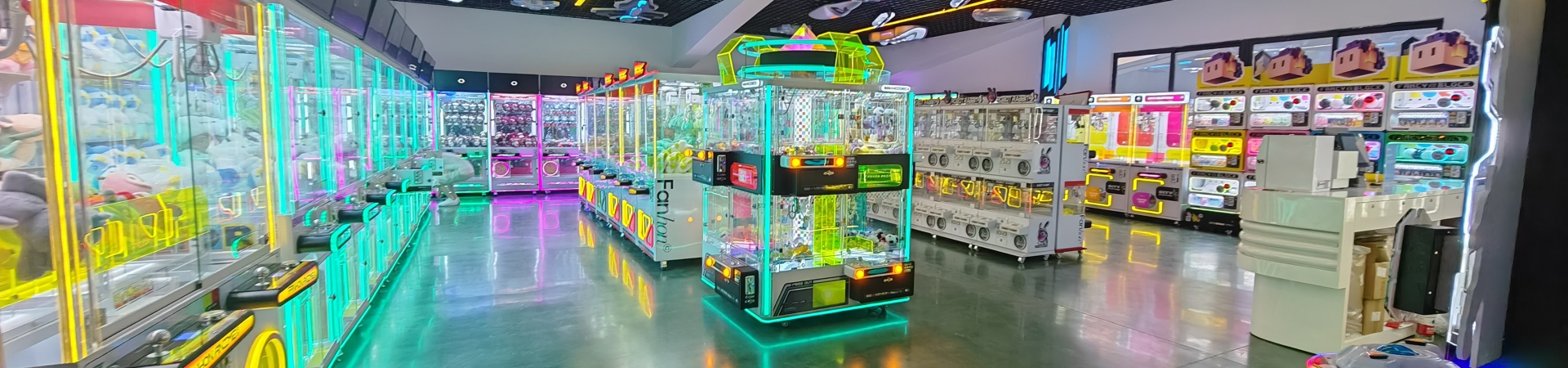
Claw machines have become a popular entertainment business model in arcades, shopping malls, family entertainment centers, cinemas, restaurants, amusement venues, and other high-traffic locations.
For entrepreneurs considering this business, one of the most important questions is:
Are claw machines profitable?
The answer depends on several factors, including machine cost, location, customer traffic, pricing, prize costs, machine performance, and ongoing operating expenses.
A well-planned claw machine business can generate recurring revenue from relatively compact equipment, but profitability should always be evaluated based on the actual market and operating conditions.
This guide explains how claw machine businesses generate revenue, how to estimate profit, and what factors can improve your return on investment.
How Does a Claw Machine Make Money?
The basic business model is simple.
Customers pay to play the machine for a chance to win a prize.
Revenue can come from:
Coin payments
Bill payments
Card payments
QR code payments
Cashless payment systems
For example, if a machine is configured at a particular price per play, every successful transaction contributes to the machine's gross revenue.
The business owner then needs to account for:
Prize costs
Location rent or revenue sharing
Electricity
Maintenance
Payment processing fees
Transportation
Labor
Marketing
Other operating expenses
The difference between revenue and operating costs determines the actual profit.
Are Claw Machines Profitable?
Claw machines can be profitable, but there is no universal profit figure.
A machine located in a busy shopping mall may perform very differently from the same machine placed in a low-traffic location.
The most important factors include:
1. Location
Customer traffic is one of the biggest factors affecting revenue.
2. Machine Selection
Different machine sizes, designs, payment systems, and configurations may perform differently.
3. Prize Selection
Attractive prizes can encourage customers to play repeatedly.
4. Pricing
The cost per play needs to balance customer affordability with business profitability.
5. Operating Costs
Rent, prize costs, maintenance, and payment fees directly affect net profit.
6. Machine Availability
A machine that is frequently out of service cannot generate revenue.
Location Is One of the Most Important Factors
A high-quality claw machine cannot compensate for a poor location.
Potential locations include:
Shopping malls
Arcades
Family entertainment centers
Cinemas
Restaurants
Bowling centers
Amusement parks
Tourist attractions
Supermarkets
Entertainment complexes
Retail stores
Children's entertainment areas
When evaluating a location, consider:
Daily foot traffic
Customer demographics
Average customer age
Visibility
Nearby attractions
Available floor space
Rental cost
Revenue-sharing requirements
Competition
Operating hours
A highly visible location with strong customer traffic can potentially produce much better results than a hidden location with limited visitors.
Choosing the Right Claw Machine
Machine selection should match the target location.
For example:
Small Claw Machines
Suitable for:
Restaurants
Small retail stores
Children's areas
Convenience locations
Smaller entertainment venues
Standard Commercial Claw Machines
Suitable for:
Arcades
Shopping malls
Family entertainment centers
Entertainment complexes
Large or Multi-Player Machines
Suitable for:
Large arcades
Shopping centers
Entertainment parks
High-traffic commercial locations
Before purchasing, consider machine dimensions, prize capacity, payment options, cabinet design, claw mechanism, power requirements, and customization options.
How Much Does a Claw Machine Cost?
The purchase price depends on the machine type and configuration.
Factors affecting the price may include:
Machine size
Cabinet materials
Acrylic or glass construction
Claw mechanism
Control system
Lighting
Display screen
Payment system
Prize capacity
Branding
OEM/ODM customization
Order quantity
Packaging
Shipping
Buyers should evaluate the total cost of ownership, rather than comparing suppliers based only on the machine's initial price.
A lower purchase price does not necessarily mean a lower long-term operating cost.
How to Calculate Claw Machine Profit
A simple calculation can help estimate the potential profitability of a machine.
Basic Formula
Gross Revenue = Number of Plays × Price Per Play
Then:
Net Profit = Gross Revenue − Operating Costs
Operating costs may include:
Prize costs
Rent
Revenue sharing
Payment fees
Electricity
Maintenance
Transportation
Labor
Marketing
For example, suppose a machine receives a certain number of paid plays per day.
The business owner can multiply:
Daily Plays × Price Per Play × Operating Days
to estimate gross revenue over a specific period.
The actual profit must then be calculated after deducting all relevant expenses.
This approach allows operators to compare different locations and machine configurations.
Understanding Claw Machine ROI
ROI means Return on Investment.
A simplified formula is:
ROI = Net Profit ÷ Initial Investment × 100%
Initial investment may include:
Machine purchase price
Shipping
Installation
Initial prizes
Location setup
Branding
Other startup costs
For example, if the total initial investment is $5,000 and the business generates $1,000 in net profit over a defined period, the operator can use that figure to evaluate the return on the original investment.
Actual ROI will vary significantly depending on location, customer traffic, pricing, prize costs, and operating expenses.
Prize Costs and Profitability
Prizes are an important part of the business model.
Popular options include:
Plush toys
Character toys
Blind boxes
Collectibles
Figures
Keychains
Small electronics
Seasonal products
Licensed merchandise
The prize should be attractive enough to encourage customers to play while maintaining a sustainable prize cost.
Operators should also consider:
Prize size
Prize weight
Wholesale cost
Target audience
Seasonal demand
Product popularity
Machine compatibility
Changing prizes regularly can help maintain customer interest.
Pricing Your Claw Machine
The price per play should be determined according to the local market.
Consider:
Local purchasing power
Competitor pricing
Prize value
Customer demographics
Location quality
Machine type
Average customer spending
A higher price does not automatically mean higher profit.
If the price is too high, customers may play less frequently.
If the price is too low, the machine may generate insufficient revenue to cover prize and location costs.
The goal is to find a sustainable balance between play frequency, prize cost, customer satisfaction, and operating expenses.
Revenue Sharing with Locations
Many claw machine businesses operate through partnerships with existing venues.
Instead of paying traditional fixed rent, an operator may negotiate:
Fixed monthly rent
Revenue sharing
Profit sharing
Hybrid arrangements
Revenue sharing can reduce the initial risk of entering a new location, depending on the agreement.
Before placing machines, clearly define:
Revenue calculation method
Payment schedule
Electricity responsibility
Maintenance responsibility
Machine ownership
Operating hours
Machine relocation rights
Contract duration
A good location partnership can benefit both the venue and the claw machine operator.
How to Increase Claw Machine Revenue
Several strategies can help improve machine performance.
1. Improve Visibility
Place machines where customers can easily see them.
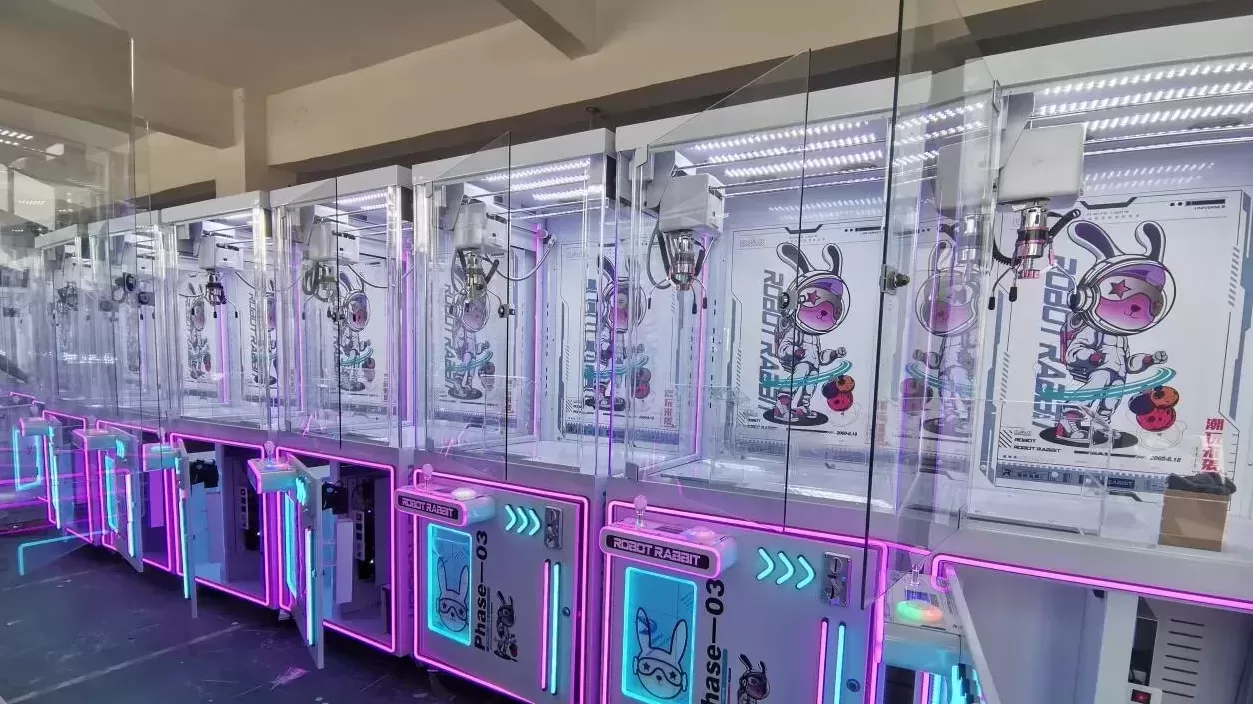
Bright LED lighting, attractive cabinet designs, and colorful prizes can increase visual appeal.
2. Refresh Prizes
Replace slow-moving prizes with more attractive options.
3. Monitor Performance
Track revenue and play frequency for each machine.
4. Test Different Prices
Depending on the market, operators can test different pricing strategies.
5. Use Cashless Payment
Adding card or QR payment options can make transactions more convenient.
6. Keep Machines Working
Regular maintenance helps reduce downtime.
7. Optimize Prize Placement
Organize prizes so the machine looks full, attractive, and easy to understand.
Use Data to Manage Your Claw Machine Business
Once you operate multiple machines, data becomes increasingly important.
Track:
Daily revenue
Weekly revenue
Monthly revenue
Number of plays
Prize costs
Maintenance costs
Location costs
Payment fees
Machine downtime
This information can help you identify:
High-performing machines → Keep and optimize
Average-performing machines → Test improvements
Low-performing machines → Consider relocating
Moving a machine from a weak location to a stronger location can sometimes have a greater impact than purchasing additional equipment.
Start Small and Scale Gradually
New operators do not necessarily need to purchase a large number of machines immediately.
A practical approach can be:
Step 1
Choose several suitable locations.
Step 2
Install a small number of machines.
Step 3
Track revenue and operating costs.
Step 4
Identify the best-performing locations.
Step 5
Optimize machine configuration and prizes.
Step 6
Expand gradually.
This approach allows entrepreneurs to learn the local market before making a larger investment.
Buying Directly from a Claw Machine Manufacturer
For larger projects, purchasing directly from a claw machine manufacturer can provide several potential advantages.
These may include:
Factory-direct pricing
OEM customization
ODM development
Multiple machine models
Payment system options
Spare parts support
Technical assistance
Bulk order support
Packaging and shipping coordination
A manufacturer can also help buyers select machine configurations based on their target market and business requirements.
When comparing suppliers, ask about:
Machine specifications
Production capacity
Quality control
Warranty
Spare parts
Customization
Production time
Packaging
Shipping
After-sales support
Is a Claw Machine Business a Good Investment?
A claw machine business may be attractive because the equipment can operate for extended hours without requiring a full-time employee standing beside every machine.
However, profitability should not be assumed.
Before investing, calculate:
Initial Investment
Expected Revenue
−
Prize Costs
−
Location Costs
−
Payment Fees
−
Maintenance
−
Other Operating Expenses
=
Estimated Net Profit
This calculation provides a much more realistic picture of potential profitability.
Claw Machine Business Profitability Checklist
Before purchasing machines, ask yourself:
Market
Is there sufficient customer traffic?
Who is the target customer?
What prizes are popular locally?
Location
Is the machine highly visible?
What is the rental or revenue-sharing cost?
How many customers pass the location?
Equipment
Is the machine designed for commercial use?
Does it support the required payment system?
Is customization available?
Operations
Who will refill prizes?
Who will maintain the machines?
How often will revenue be collected?
Financials
What is the machine purchase cost?
What is the shipping cost?
What is the prize cost?
What is the expected revenue?
What is the estimated ROI?
Final Thoughts
The profitability of a claw machine business depends on much more than the price of the machine.
Location, customer traffic, prize selection, pricing, operating costs, machine reliability, and business management all influence the final result.
For entrepreneurs entering the amusement equipment industry, starting with a manageable number of machines, testing locations, tracking performance, and scaling based on real operating data can be a practical approach.
Choosing the right commercial claw machine and working with a reliable manufacturer can also simplify purchasing, customization, spare parts management, and long-term support.
If you are planning to start or expand a claw machine business, focus on the complete business model—not just the machine price.
FAQ
Are claw machines profitable?
Claw machines can be profitable when they are placed in suitable locations and managed effectively. Actual profitability depends on customer traffic, pricing, prize costs, location expenses, and other operating costs.
How much money can a claw machine make?
There is no fixed amount. Revenue depends heavily on location, customer traffic, price per play, machine configuration, and operating hours.
What is the ROI of a claw machine?
ROI varies by business model and location. Operators should calculate ROI based on the total initial investment and actual net profit rather than using a universal industry figure.
What is the best location for a claw machine?
Potential locations include shopping malls, arcades, family entertainment centers, cinemas, restaurants, amusement parks, and other areas with strong customer traffic.
How can I increase claw machine profits?
Operators can improve performance by choosing better locations, optimizing pricing, using attractive prizes, offering convenient payment options, maintaining machines properly, and monitoring performance data.
Is it better to buy one claw machine or multiple machines?
New operators may prefer to start with a smaller number of machines, test locations, and expand after identifying successful locations and operating strategies.
Can I customize a commercial claw machine?
Many manufacturers offer OEM/ODM customization, including cabinet design, colors, branding, lighting, payment systems, and other configurations. Buyers should confirm available customization options with the manufacturer.