

How to Set the Claw Strength on a Commercial Claw Machine
Claw strength is one of the most important operating settings on a commercial claw machine.
The claw needs enough grip to pick up prizes while maintaining an appropriate level of challenge for players. If the claw is too weak, customers may become frustrated because prizes are difficult to pick up. If it is too strong, prizes may be won too easily and the machine may not operate according to the business owner's intended settings.
For arcade operators and claw machine business owners, understanding claw strength settings is therefore an important part of operating a commercial machine.
This guide explains how claw strength works, what factors affect it, and how to approach machine adjustment and testing.
What Is Claw Strength?
Claw strength refers to how strongly the claw grips a prize when the machine attempts to pick it up.
When a player starts a game, the claw moves to the selected position, descends toward the prize, closes around it, and attempts to lift it.
The gripping force of the claw affects whether the prize:
Remains securely in the claw
Slips during lifting
Moves but eventually falls
Reaches the prize chute successfully
Different commercial claw machines may use different control systems and adjustment methods.
The available settings depend on the specific machine model and control board.
Why Is Claw Strength Important?
The correct claw strength is important for both customer experience and machine operation.
Customer Experience
Players expect the claw machine to provide a realistic opportunity to win.
If the claw is consistently too weak, players may feel that their attempts have little chance of success.
Prize Compatibility
Different prizes have different:
Sizes
Shapes
Weights
Materials
Surface textures
A claw setting that works well for lightweight plush toys may not work the same way for heavier prizes or boxed products.
Business Operation
Commercial claw machines are operated as entertainment equipment.
The machine should provide a balance between challenge and playability while being configured according to the operator's business requirements and local regulations.
What Affects Claw Strength?
Several factors can influence how effectively a claw picks up a prize.
1. Claw Strength Setting
The machine's control system may provide adjustable settings related to claw power or gripping behavior.
The exact adjustment method depends on the machine's electronics and control board.
Some machines allow settings to be adjusted through a control panel, while others use specific parameters in the machine's control system.
Always follow the manufacturer's instructions for the specific model.
2. Prize Weight
Prize weight has a major effect on the result.
A lightweight plush toy may be easier to lift than a heavier prize.
When setting up a machine, consider the typical weight range of the prizes being used.
3. Prize Shape
Shape can be just as important as weight.
A prize with a convenient surface for the claw to grip may be easier to pick up than a smooth or irregularly shaped item.
For example, a plush toy with a suitable body or tag area may provide a better gripping point than a flat box.
4. Claw Size
The size and design of the claw should match the type of prizes being used.
Large prizes may require a suitable claw configuration, while smaller prizes can often work better with a smaller claw.
Choosing the right machine and claw configuration before purchase is therefore important.
5. Mechanical Condition
Claw performance can change if the mechanical components become worn.
Potential areas to inspect include:
Claw arms
Springs
Motors
Cables
Connectors
Mechanical joints
Control components
If a claw that previously worked correctly suddenly becomes weak, maintenance should be considered before changing the machine settings.
How to Adjust Claw Strength
The exact procedure varies between commercial claw machine models.
However, a typical adjustment process can follow several steps.
Step 1: Identify the Machine Control System
First, determine which control board and settings your machine uses.
Check the machine manual or contact the manufacturer if you are unsure.
Do not randomly change electronic parameters without understanding what they control.
Step 2: Check the Current Settings
Record the existing settings before making changes.
This gives you a reference point and makes it easier to return to the previous configuration if necessary.
Step 3: Prepare the Actual Prizes
Use the same or similar prizes that customers will actually play for.
Testing with an empty machine or completely different objects will not provide an accurate representation of normal operation.
Step 4: Test the Claw
Place several representative prizes inside the machine.
Observe:
How the claw closes
Whether it grips the prize
Whether the prize can be lifted
Whether it remains stable during movement
Whether the claw releases the prize correctly
Step 5: Make Small Adjustments
If adjustment is necessary, make changes gradually.
Avoid making large changes at once.
After each adjustment, perform additional tests using the actual prizes.
Step 6: Test Different Prize Positions
A claw machine should not be evaluated from only one position.
Test prizes located:
Near the center
Near the side
Near the front
Near the back
In different orientations
This provides a better understanding of the machine's overall performance.
How Strong Should a Claw Machine Be?
There is no single claw strength setting that is perfect for every machine.
The appropriate configuration depends on:
Machine model
Claw design
Prize weight
Prize shape
Prize material
Business requirements
Local operating requirements
Instead of asking for a universal “best” claw strength, operators should evaluate the machine together with the actual prizes being used.
Claw Strength and Prize Selection
Claw strength should always be considered together with prize selection.
For example, a machine filled with small plush toys may require different operating characteristics from a machine containing larger boxed prizes.
Before launching a machine, check whether:
Claw size + claw strength + prize size + prize weight
are appropriate for each other.
This can make the machine more consistent and easier to operate.
How to Test a Commercial Claw Machine
Testing is an important part of setting up a commercial claw machine.
A simple testing process can include multiple trial plays.
Record observations such as:
Does the claw close completely?
Does it grip the prize properly?
Does the claw lift the prize?
Does the prize remain stable?
Does the claw movement appear smooth?
Does the machine return to the correct position?
Does the prize drop correctly?
If the results are inconsistent, inspect both the machine settings and mechanical components.
Do Not Ignore Mechanical Problems
Not every weak claw is caused by the claw strength setting.
A machine may appear weak because of a mechanical or electrical problem.
Possible causes include:
Worn claw components
Loose connections
Damaged wiring
Motor problems
Control board issues
Power supply problems
Mechanical obstruction
Before changing settings significantly, check whether the machine is functioning correctly.
This can prevent operators from trying to solve a hardware problem through software settings.
Different Machines May Have Different Settings
Commercial claw machines are not all designed the same way.
Different models may have different:
Control boards
Motors
Claw mechanisms
Software
Adjustment menus
Electrical systems
For this reason, instructions for one model should not automatically be applied to another machine.
If you are purchasing machines from a manufacturer, ask for the user manual and technical instructions for your specific model.
How Manufacturers Can Help
A professional claw machine manufacturer can provide support during machine setup.
Depending on the supplier, support may include:
User manuals
Machine specifications
Setting instructions
Installation guidance
Troubleshooting
Spare parts
Technical support
When purchasing commercial claw machines, it is worth asking the supplier what technical support is included.
Claw Machine Settings for Different Markets
International claw machine businesses may operate in different countries with different customer preferences and regulations.
The machine configuration should take into account the actual operating environment.
Consider:
Local prize preferences
Customer age groups
Machine location
Operating hours
Payment methods
Local regulations
Venue requirements
For example, a machine installed in a shopping mall may have different requirements from one installed in a dedicated arcade.
Choosing the Right Prize for Your Claw Machine
Prize selection is an important part of machine performance.
Popular prize categories may include:
Plush toys
Blind boxes
Small toys
Keychains
Character merchandise
Boxed gifts
Other suitable prizes
When choosing prizes, consider whether the claw can properly interact with them.
A prize may look attractive but still be difficult to grip because of its size, shape, or material.
Common Claw Machine Problems
Some common operating problems include:
The Claw Cannot Lift the Prize
Possible factors include:
Prize is too heavy
Claw strength is unsuitable
Claw cannot obtain a good grip
Mechanical components need inspection
The Claw Does Not Close Correctly
Check:
Claw mechanism
Motor
Wiring
Control system
Mechanical obstruction
The Prize Slips Immediately
Consider:
Prize shape
Prize position
Claw grip
Claw condition
Prize weight
The Claw Works Inconsistently
Check whether the issue is related to:
Mechanical wear
Electrical connections
Power supply
Control settings
Prize placement
If the issue cannot be resolved through normal inspection, contact the manufacturer or technical support team.
Maintenance Can Affect Claw Performance
Regular maintenance helps keep commercial claw machines operating consistently.
Operators should regularly inspect:
Claw arms
Motors
Cables
Wiring
Control components
Glass or acrylic
Lighting
Payment systems
Internal mechanisms
Cleaning is also important.
Dust and debris can accumulate around mechanical components and affect operation over time.
Why Proper Testing Matters Before Opening
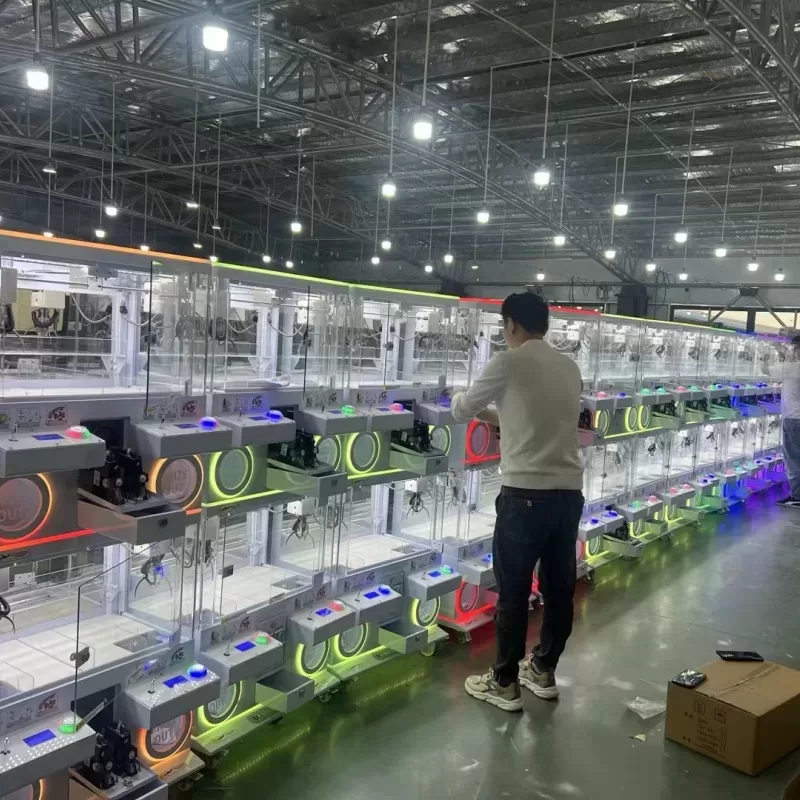
Before placing a claw machine into a commercial location, test the machine thoroughly.
This is particularly important for:
New machines
Customized machines
Machines with new prize types
Machines with new payment systems
Machines moved to a new location
Testing before opening can help identify potential problems before customers start using the machine.
Choosing a Professional Claw Machine Manufacturer
If you are purchasing commercial claw machines, choose a supplier that can provide more than just the machine itself.
Look for a manufacturer that can provide:
Multiple machine models
OEM/ODM customization
Technical support
Quality control
Spare parts
Testing
Professional packaging
International shipping
Direct communication with the manufacturer can also make technical questions easier to resolve.
Why Choose Fanhong Animation?
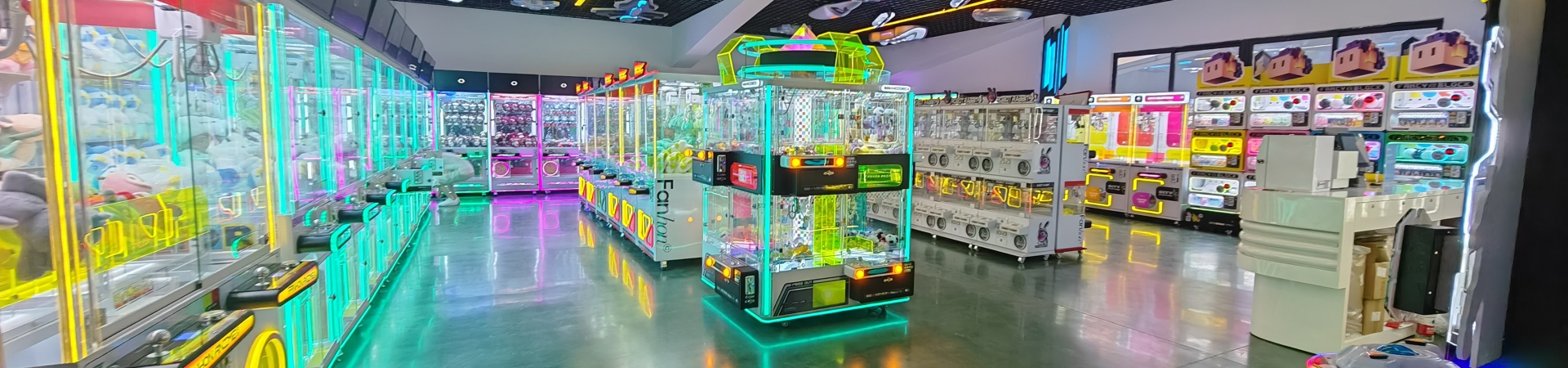
Fanhong Animation is a professional claw machine and arcade equipment manufacturer in Guangzhou, China.
We provide different types of commercial claw machines and amusement equipment for overseas customers.
Our services can include:
Factory-direct supply
OEM/ODM customization
Custom colors
Custom logos
Payment system options
Product selection
Quality control
Machine testing
Packaging
Worldwide shipping
After-sales support
If you are planning to purchase claw machines for an arcade, shopping mall, family entertainment center, claw machine store, or other commercial venue, our team can help you select suitable equipment according to your requirements.
Conclusion
Claw strength is an important part of commercial claw machine operation, but it should not be considered separately from prize selection, claw design, machine condition, and customer experience.
The correct approach is to test the machine using the actual prizes and make appropriate adjustments based on the specific machine model and operating requirements.
If the claw suddenly becomes weak or inconsistent, check the mechanical and electrical components before changing the settings.
For new buyers, working with an experienced claw machine manufacturer can make installation, customization, testing, and technical support easier.
With the right machine, suitable prizes, proper settings, and regular maintenance, operators can create a more consistent and enjoyable claw machine experience.
FAQ
1. How do I adjust claw strength on a commercial claw machine?
The adjustment method depends on the machine's control system. Check the manufacturer's manual or contact the supplier for model-specific instructions.
2. What affects claw grip strength?
Claw settings, claw design, prize weight, prize shape, mechanical condition, and electrical components can all affect performance.
3. Can I use the same claw strength for all prizes?
Not necessarily. Different prizes have different weights, shapes, and surfaces, so testing with the actual prizes is recommended.
4. Why is my claw machine suddenly weaker?
A sudden change may be caused by mechanical wear, wiring problems, motor issues, power supply problems, or control-system issues rather than the settings alone.
5. Should I adjust claw strength before opening my machine?
Yes. Test the machine with the actual prizes and operating configuration before putting it into commercial operation.
6. Can the manufacturer help me adjust my claw machine?
A professional manufacturer can usually provide model-specific instructions, technical support, and troubleshooting assistance.