


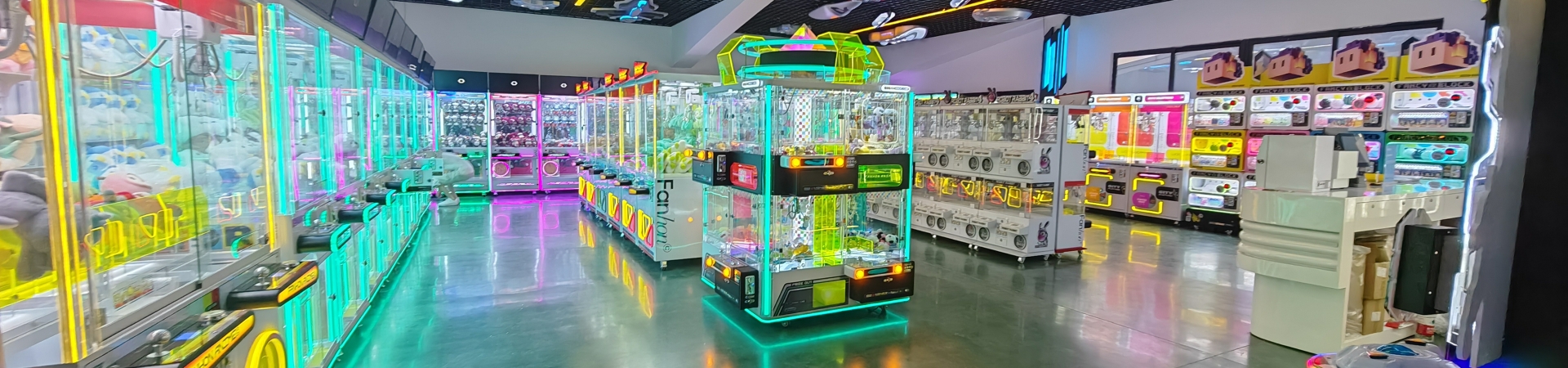
Claw Machine Small Space and Micro-Venue Setup Guide
Claw machine small space and micro-venue setup involve the strategic planning and equipment selection required to operate commercial claw machines in compact locations. For B2B buyers, not every opportunity is a massive family entertainment center (FEC). Many highly profitable locations—such as small cafes, narrow mall corridors, cinema lobbies, and independent retail shops—have limited floor space. By choosing the right machine size and layout, operators can turn even a 5-square-meter area into a consistent revenue generator. The key is maximizing revenue per square meter without crowding the customer or blocking traffic.
This guide explains how to select and set up claw machines in small spaces from a manufacturer's perspective.
Why Micro-Venues Are Profitable
Small spaces offer unique advantages.
Key benefits:
Lower Rent: Rent for a corner in a mall or a spot in a cafe is much cheaper than a full storefront.
High Impulse: Capturing customers while they wait (e.g., at a cinema or cafe) leads to high impulse plays.
Low Overhead: Fewer machines mean lower electricity and maintenance costs.
Easier Management: One or two machines are easy to manage and restock.
Testing Ground: Small spaces are perfect for testing new locations and prize mixes before committing to a larger lease.
Micro-venues are an excellent way to scale a claw machine business with low risk.
Choosing the Right Machine Size
Space is the ultimate constraint.
| Machine Type | Footprint (L x W) | Best For |
|---|---|---|
| Countertop Mini Claw | ~0.4m x 0.4m | Cafes, retail counters, reception areas. |
| Standard Mini Claw | ~0.6m x 0.6m | Small shops, narrow corridors, tight corners. |
| Slim 1-Player Claw | ~0.8m x 0.7m | Cinema lobbies, mall walkways, small arcades. |
| Standard 1-Player | ~1.0m x 0.8m | Small dedicated arcades or FEC zones. |
Measure your space accurately before ordering. Remember to account for the player standing in front of the machine.
Layout and Placement in Tight Spaces
Where you put the machine matters as much as the size.
Placement strategies:
Along the Wall: Place the machine against a wall to save floor space and provide a clear walkway.
Corner Placement: Use unused corners to maximize floor area.
Near Waiting Areas: Place machines near seating areas, checkout counters, or cinema doors where people have idle time.
Angle the Machine: Place it at a slight angle (e.g., 45 degrees) so it faces the flow of traffic without blocking the path.
Never block emergency exits, fire extinguishers, or main walkways.
Prize Selection for Small Machines
Small machines require careful prize choices.
Considerations:
Size Limits: Prizes must fit through the smaller prize chutes and not overpower the mini claw.
High Turnover: Use small, affordable, high-appeal items (e.g., keychains, mini plushies, blind box figures) that can be won frequently.
Impulse Value: Since players are playing on impulse, the perceived value of the prize should be high relative to the price per play.
Easy Restocking: Choose machines with easy-to-access prize areas for quick refills in busy locations.
Avoid large or heavy prizes that cause jams in compact machines.
Power and Security Considerations
Small spaces have unique infrastructure constraints.
Checklist:
Power Access: Does the location have a nearby outlet? Check the machine's voltage requirements. For mini machines, a standard wall outlet is usually sufficient.
Power Consumption: Mini machines use less power, but ensure the circuit isn't overloaded if placed in an old building.
Security: Small machines in unsupervised areas are vulnerable. Use high-quality locks and ensure the location has decent lighting or CCTV coverage.
Cashless Options: For micro-venues, cashless card readers or QR codes can reduce the need for frequent cash collection.
Keep the setup simple and secure.
Common Small Space Setup Mistakes
Operators sometimes make avoidable mistakes:
Buying a standard 1-player machine and finding it blocks the entire aisle.
Placing the machine where it cannot be seen by passing traffic.
Using prizes that are too large, causing constant jams in the small prize chute.
Ignoring the need for a power outlet and running long, unsafe extension cords.
Failing to negotiate a clear spot with the landlord, leading to the machine being moved later.
These mistakes can kill profitability in a small space.
Practical B2B Insights
From a manufacturer's perspective, small spaces require precision.
First, always ask the venue owner for the exact dimensions of the proposed spot before ordering a machine.
Second, if space is extremely tight, consider countertop mini claw machines. They are highly attractive and take up zero floor space.
Third, use bright, eye-catching lighting on the machine to draw attention in a busy corridor.
Fourth, keep the prize mix fresh. In a small space, players see the same machine frequently, so rotating prizes every 2-4 weeks is crucial.
Fifth, leverage cashless payment. It reduces the need for staff to manage coins and makes the machine easier to operate in a shared space like a cafe.
Frequently Asked Questions
What is the smallest commercial claw machine available?
Countertop mini claw machines can be as small as 0.4m x 0.4m, designed for small prizes like capsules or keychains.
Can I put a claw machine in a small cafe?
Yes, countertop or standard mini claw machines are perfect for cafes, placed near the checkout or waiting area.
How much space do I need for a claw machine in a narrow aisle?
A slim 1-player machine needs about 0.8m of width, plus enough space for a person to stand. Ensure it doesn't block the walkway.
What prizes work best for small claw machines?
Small, lightweight items like mini plushies, keychains, and capsule toys. Avoid heavy or bulky items.
How do I power a claw machine in a small space?
Mini machines typically run on standard voltage and can plug into a normal wall outlet.
How do I prevent theft in an unsupervised small location?
Use high-quality locks, ensure the machine is securely anchored if possible, and prefer cashless payment to reduce cash on hand.
Can I use a standard claw machine in a small shop?
Only if the shop has enough space for the machine plus player clearance. Otherwise, a mini or slim model is better.
How do I negotiate placing a machine in a small space?
Offer the landlord a revenue share or a flat monthly fee. Show them how the machine adds value to their customer experience.
Conclusion
Claw machine small space and micro-venue setups are a highly effective way to generate revenue with lower overhead. By choosing the right machine size, planning the layout carefully, and selecting the right prizes, operators can turn even the tightest spaces into profitable attractions.
For B2B buyers, working with a manufacturer that offers a range of compact and mini claw machines is essential for capturing these micro-venue opportunities.
If you are planning to place claw machines in small spaces, contact us for mini machine catalogs, dimensions, and wholesale pricing.