


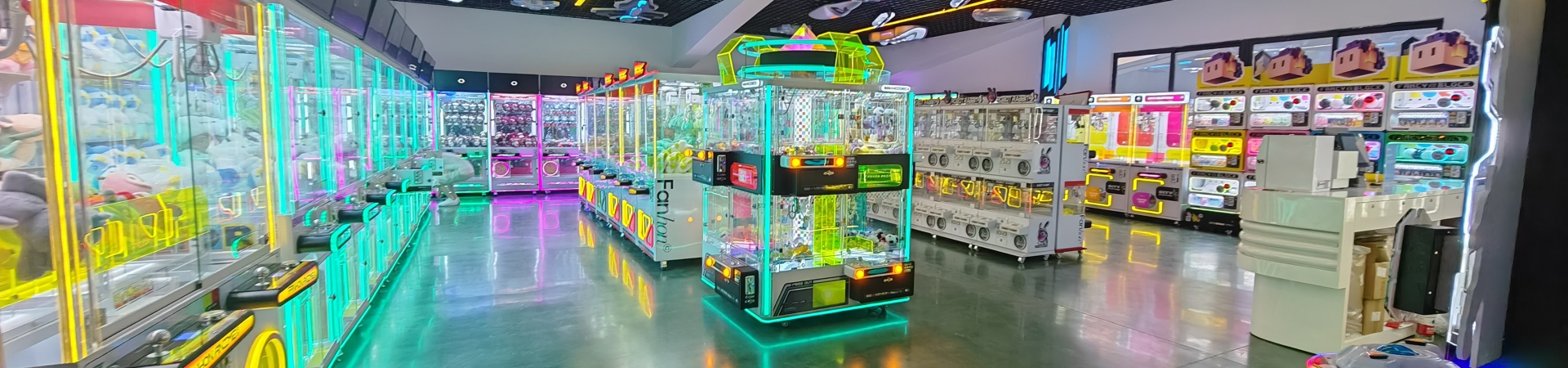
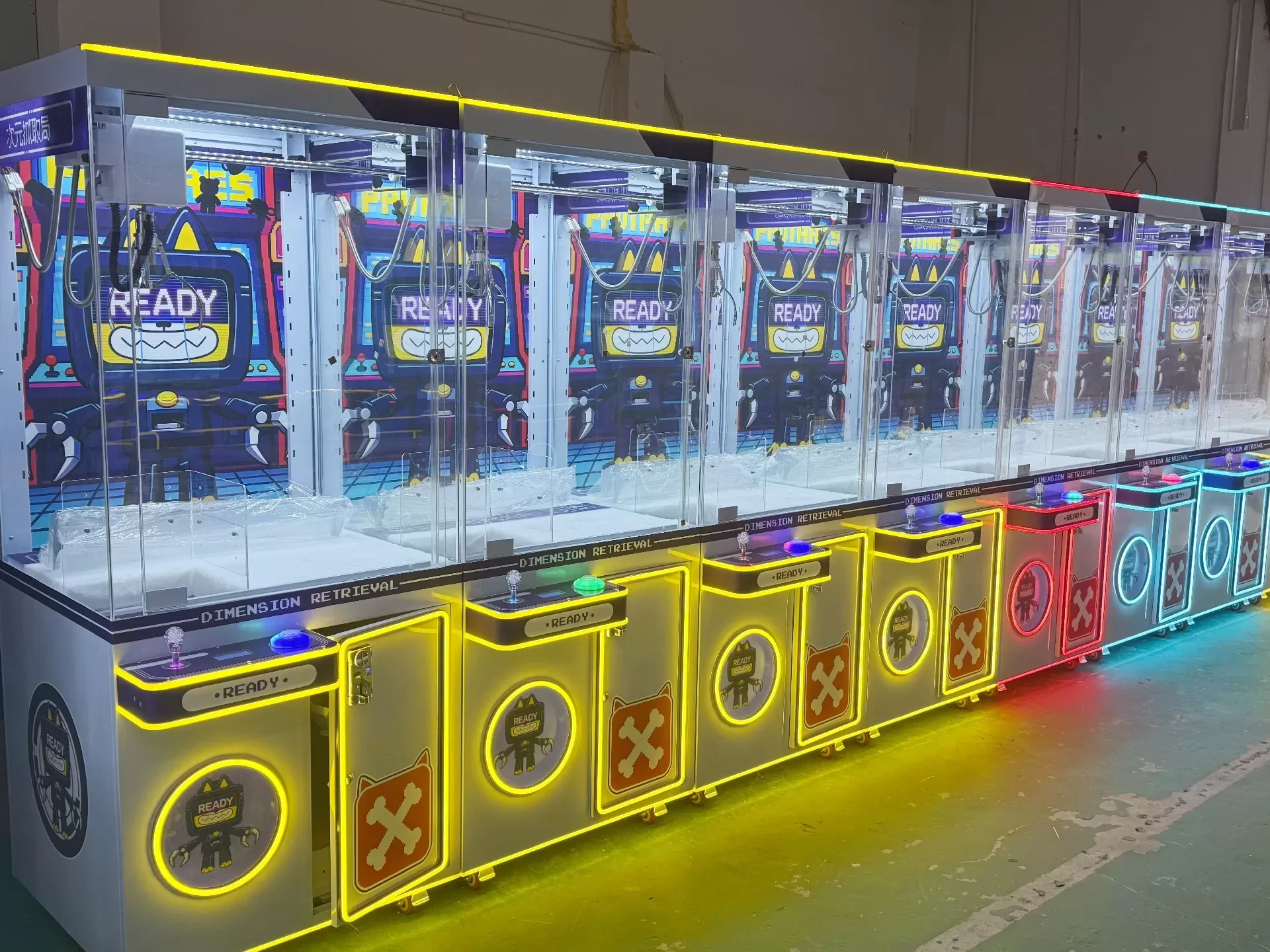
To start a claw machine business, first define your business model and target customers, choose suitable locations, determine your equipment budget, select commercial claw machines, prepare appropriate prizes and payment systems, and establish a plan for maintenance and daily operations. Start with a manageable number of machines, monitor customer demand, and adjust machine locations, prizes, pricing, and configurations based on actual operating results.
Introduction
Claw machines have become a familiar attraction in arcades, shopping malls, family entertainment centers, retail stores, restaurants, and other entertainment venues.
For entrepreneurs, they can be an interesting way to add an interactive entertainment product to a commercial location.
But starting a claw machine business is more than simply buying a machine and putting it somewhere.
You need to consider:
Where the machine will be installed
Who the target customers are
Which machine models to buy
What prizes to use
How customers will pay
How much space is available
How machines will be maintained
How prizes will be replenished
How equipment will be purchased and delivered
This guide explains the major steps involved in starting a claw machine business.
What Is a Claw Machine Business?
A claw machine business uses crane-style prize machines as an entertainment product.
Customers pay to operate the machine and attempt to pick up a prize using the claw.
The business may operate in several ways.
Dedicated Arcade
The operator rents or owns a dedicated entertainment location and installs multiple arcade machines.
Shopping Mall Location
Machines can be placed in suitable areas inside shopping malls subject to the venue's requirements.
Retail Location
A business may install one or several claw machines inside a retail store.
Family Entertainment Center
Claw machines can be combined with other amusement equipment.
Revenue-Sharing Location
An operator may work with another business that provides the physical location, with the parties agreeing on a commercial arrangement.
The appropriate model depends on local market conditions and business agreements.
Step 1: Define Your Claw Machine Business Model
Before buying equipment, determine what type of business you want to build.
Ask yourself:
Will I operate a dedicated arcade?
Will I place machines in existing businesses?
Will I operate machines in a shopping mall?
Will I start with one machine or several?
Will I purchase machines for my own business or resell them?
Your answers will influence your machine selection and budget.
Step 2: Research Your Local Market
Before investing in equipment, research the market where you plan to operate.
Look at:
Customer demographics
Entertainment preferences
Competitors
Existing arcades
Shopping centers
Retail locations
Local regulations
Rental costs
Payment preferences
Visit similar locations and observe:
Which machines attract attention?
What prizes are popular?
How busy are the machines?
What age groups use them?
How are machines positioned?
Local market research can provide useful information before making an equipment investment.
Step 3: Choose the Right Location
Location can have a major impact on the performance of a claw machine business.
Potential locations include:
Shopping malls
Arcades
Family entertainment centers
Restaurants
Retail stores
Bowling centers
Leisure venues
Entertainment complexes
When evaluating a location, consider:
Foot Traffic
More people passing the machine can create more opportunities for customers to notice it.
Visibility
A machine hidden behind other equipment may receive less attention.
Target Customers
The location should match the customers you want to attract.
Rental Cost
A high-traffic location may also have higher rental or revenue-sharing costs.
Competition
Check how many competing claw machines or similar entertainment products are already nearby.
Step 4: Determine Your Equipment Budget
Your equipment budget should include more than the machine purchase price.
Potential expenses include:
Claw machines
Other arcade equipment
Prizes
Shipping
Installation
Location costs
Branding
Payment systems
Spare parts
Maintenance
Marketing
For international buyers, shipping and destination-related costs should also be considered.
A detailed budget makes it easier to understand how much capital you need before starting.
Step 5: Choose Your Claw Machines
There are many different claw machine designs.
Common options include:
Standard claw machines
Mini claw machines
Large claw machines
Giant claw machines
Two-player machines
Four-player machines
Multi-station machines
Specialized prize machines
Choose the equipment according to:
Location
Available space
Target customers
Prize size
Budget
Payment requirements
Branding requirements
Do not choose a machine only because it looks attractive in photographs.
Step 6: Measure the Available Space
Before ordering machines, measure the location carefully.
Check:
Width
Depth
Height
Door dimensions
Elevator dimensions
Installation path
Also leave enough space for customers to stand and operate the machine.
For multiple machines, consider how customers will move through the equipment area.
A good layout should make the machines visible while maintaining comfortable customer access.
Step 7: Select the Right Prizes
Prizes are an important part of the claw machine experience.
Possible prize categories include:
Plush toys
Stuffed animals
Blind boxes
Figures
Small toys
Capsules
Keychains
Promotional gifts
When choosing prizes, consider:
Size
Weight
Shape
Popularity
Cost
Target customer
The prize should also be compatible with the machine and claw mechanism.
Step 8: Match the Claw to the Prize
The claw mechanism should be appropriate for the prizes being used.
For example, large plush toys may require a different configuration from small boxed products.
Before purchasing, provide your supplier with:
Prize photos
Prize dimensions
Approximate weight
Packaging information
The manufacturer can then recommend an appropriate machine configuration.
Step 9: Choose a Payment System
Payment preferences vary between markets.
Possible payment methods include:
Coins
Tokens
Banknotes
Cards
Cashless payment
Other electronic payment systems
Before ordering, determine which payment methods your customers are likely to use.
Also check whether the selected machine supports the payment system you require.
Step 10: Consider Customization
A customized machine can help create a consistent visual identity.
Customization may include:
Logo
Cabinet graphics
Colors
Lighting
Branding
Payment configuration
Exterior design
For businesses operating several machines, consistent branding can make the equipment look more integrated with the venue.
If you are building your own arcade brand, discuss OEM or ODM possibilities with the manufacturer.
Step 11: Choose a Reliable Claw Machine Manufacturer
Your equipment supplier can affect the purchasing and operating experience.
When evaluating manufacturers, check:
Factory capability
Product range
Machine specifications
Quality control
Customization
Production
Packaging
Shipping
Spare parts
Technical support
After-sales service
Do not compare suppliers based only on price.
For more information, see our guide:
How to Choose a Reliable Claw Machine Supplier
This creates a natural internal link between your business guide and supplier-selection content.
Step 12: Decide How Many Machines to Buy
There is no universal number of machines required to start.
A first-time operator may want to start with a manageable number and evaluate the market before expanding.
The appropriate number depends on:
Available capital
Location size
Customer traffic
Machine type
Business model
Rental arrangement
For a dedicated arcade, you may need a larger equipment portfolio.
For a retail location, one or a few machines may be more appropriate.
The key is to match the equipment quantity to the location and business plan.
Step 13: Plan Machine Placement
Machine placement can influence visibility and customer interaction.
Consider placing machines:
Near entrances
Along high-traffic paths
Near family areas
Near other entertainment equipment
In visually prominent locations
Avoid placing machines where they are difficult to see or access.
For larger arcades, different machine types can be arranged into sections to create a more organized customer experience.
Step 14: Establish Prize Management
A claw machine business needs a system for managing prizes.
Track:
Prize inventory
Prize cost
Popular products
Refill frequency
Damaged products
Customer preferences
If a particular prize attracts customers, you may consider increasing its availability.
If a prize performs poorly, you can test alternatives.
The goal is to use actual customer behavior to guide prize selection rather than relying only on assumptions.
Step 15: Set Your Gameplay Price
The price per play should be determined according to your market and business model.
Consider:
Local customer spending habits
Prize cost
Location costs
Machine costs
Competition
Target customers
Different locations may require different pricing strategies.
For example, a premium entertainment venue may use a different pricing structure from a small retail location.
Step 16: Understand Your Operating Costs
Starting a claw machine business involves ongoing expenses.
Potential operating costs include:
Location rent
Revenue sharing
Electricity
Prize purchases
Machine maintenance
Spare parts
Transportation
Staff
Marketing
Payment processing
Understanding these costs helps you evaluate the overall business model.
Step 17: Maintain the Machines
Regular maintenance helps keep equipment available for customers.
Check:
Claw mechanism
Motors
Joystick
Buttons
Payment system
Lighting
Display
Wiring
Prize chute
Keep the machine clean and the prize area organized.
For businesses operating several machines, keep commonly needed spare parts available where practical.
Step 18: Track Business Performance
After installation, monitor actual operating results.
Useful indicators can include:
Plays per day
Revenue
Prize consumption
Maintenance frequency
Customer feedback
Machine downtime
Location performance
Compare different machines and locations.
If one machine consistently attracts more customers, investigate why.
Possible factors include:
Machine appearance
Prize selection
Location
Price
Claw configuration
Use actual data to improve the operation.
How Much Does It Cost to Start a Claw Machine Business?
There is no single startup cost.
Your investment can depend on:
Number of machines
Machine models
Machine configurations
Prize inventory
Location
Shipping
Installation
Branding
Operating expenses
A small project with one or a few machines requires a very different budget from a complete arcade.
For a more detailed discussion of equipment pricing, see:
How Much Does a Claw Machine Cost? A Complete Pricing Guide
Can You Make Money With Claw Machines?
Claw machines can generate revenue when customers pay to play, but actual business performance varies significantly.
Factors that can affect results include:
Location
Customer traffic
Machine selection
Prize selection
Gameplay pricing
Operating costs
Competition
Maintenance
Machine availability
There is no guaranteed revenue level.
The best approach is to evaluate the specific market and monitor actual operating data.
Common Mistakes When Starting a Claw Machine Business
Buying Too Many Machines Too Early
Starting with more equipment than your location can support can increase financial pressure.
Choosing a Location Based Only on Rent
A cheap location may not provide sufficient customer traffic.
Ignoring Prize Selection
Customers are attracted by prizes, not just machines.
Choosing Equipment Only by Appearance
A visually attractive machine still needs suitable specifications and configuration.
Not Planning Maintenance
Equipment requires ongoing inspection and replacement components.
Not Tracking Performance
Without data, it is difficult to know which machines, prizes, and locations perform best.
Focusing Only on Machine Price
The total investment includes equipment, shipping, prizes, location costs, maintenance, and other expenses.
Claw Machine Business Checklist
Before starting, confirm:
Business model
Target customers
Location
Available space
Equipment budget
Machine type
Machine quantity
Prize selection
Payment system
Pricing strategy
Shipping
Installation
Spare parts
Maintenance
Supplier
Performance tracking
Frequently Asked Questions
Is a claw machine business profitable?
A claw machine business can generate revenue, but profitability depends on factors such as location, customer traffic, pricing, prizes, equipment costs, and operating expenses. Results vary by market.
How much does it cost to start a claw machine business?
There is no fixed startup cost. The budget depends on the number and type of machines, location, prizes, shipping, installation, branding, and other operating expenses.
How many claw machines should I buy to start?
There is no universal number. Start with a quantity appropriate for your available capital, location size, customer traffic, and business model.
Where are the best locations for claw machines?
Potential locations include arcades, shopping malls, family entertainment centers, retail stores, restaurants, bowling centers, and other suitable entertainment venues. The best location depends on local customer traffic and business conditions.
What prizes should I put in a claw machine?
Popular options can include plush toys, blind boxes, figures, small toys, capsules, keychains, and promotional gifts. Select prizes according to your target customers and machine configuration.
Can I customize claw machines for my business?
Many manufacturers offer customization such as logos, cabinet graphics, colors, lighting, and payment configurations. OEM and ODM options may also be available.
Should I buy claw machines directly from a manufacturer?
Buying directly from a manufacturer can provide direct communication regarding specifications, customization, production, spare parts, and technical support. Evaluate the supplier based on the complete purchasing package.
Conclusion
Starting a claw machine business requires more planning than simply purchasing equipment.
A successful setup begins with understanding your target customers and choosing an appropriate location. You then need to select machines, prizes, payment systems, pricing, and maintenance procedures that fit the specific market.
For beginners, starting with a manageable project can make it easier to learn how customers respond to different machines and prizes.
Track actual performance, improve your equipment mix, and expand when the business model supports further investment.
The most important principle is simple:
Choose the right location, the right machines, the right prizes, and the right operating strategy for your market.
CTA
Planning to start a claw machine business?
Contact Fanhong to discuss claw machine models, commercial arcade equipment, customization, bulk orders, shipping, spare parts, and equipment solutions for your project.